
Aesthetics · Freienstein
Veneers – Natural Beauty for Your Front Teeth
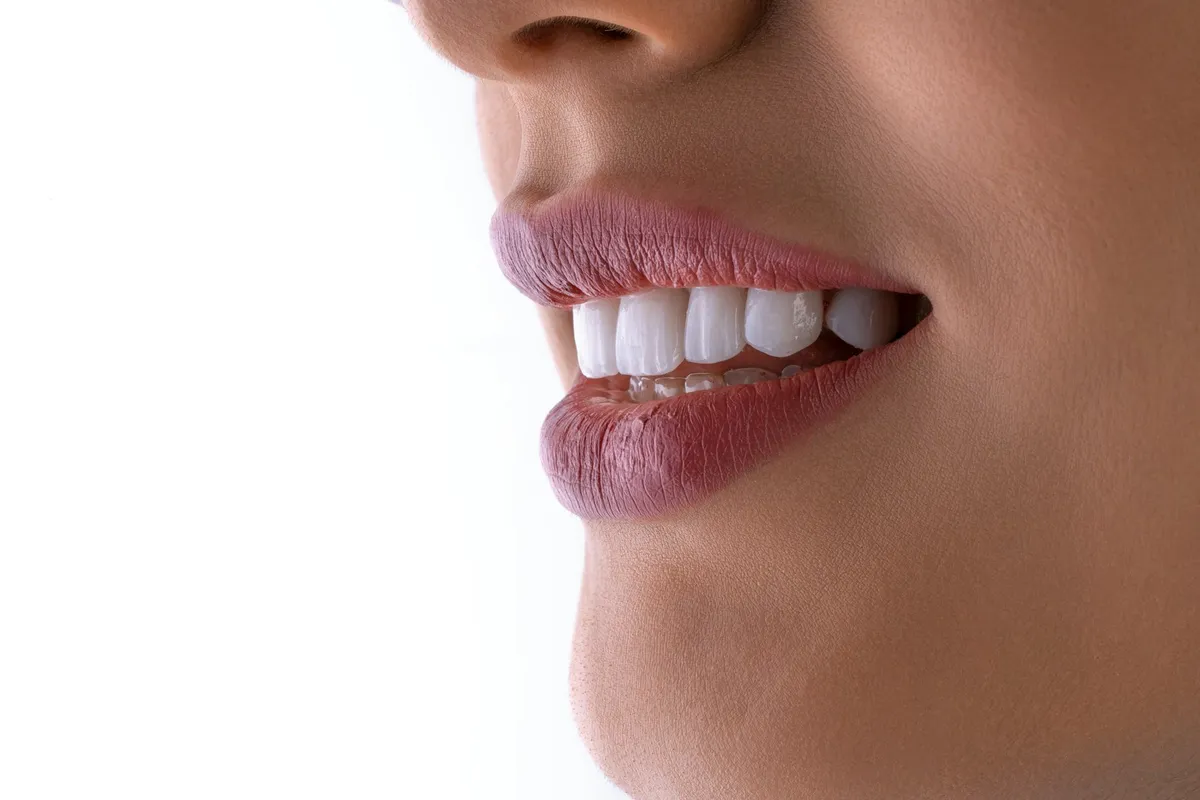
Ultra-thin ceramic shells that harmonise the shape, colour and position of your teeth – minimally invasive or entirely without grinding. Metal-free, biocompatible and designed so no one notices.
0.3–0.7 mm
material thickness
10–15 years
typical lifespan
2–3 appointments
until placement
100% metal-free
all-ceramic
What it is about
Veneers – briefly explained
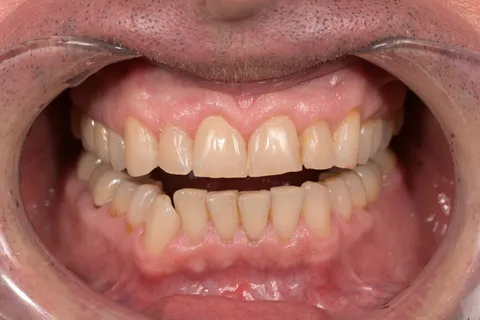
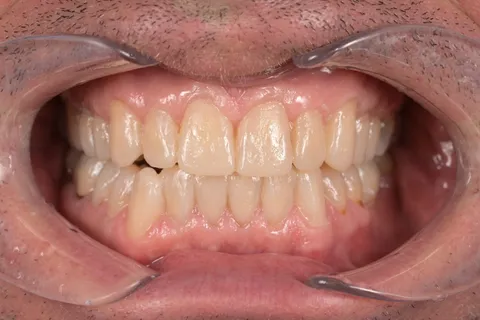
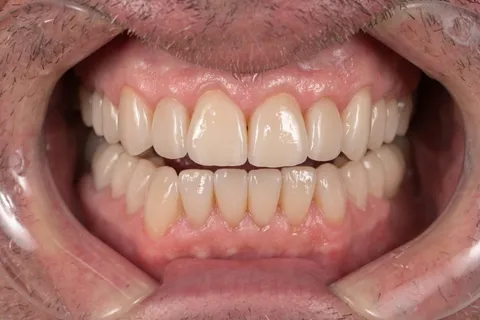
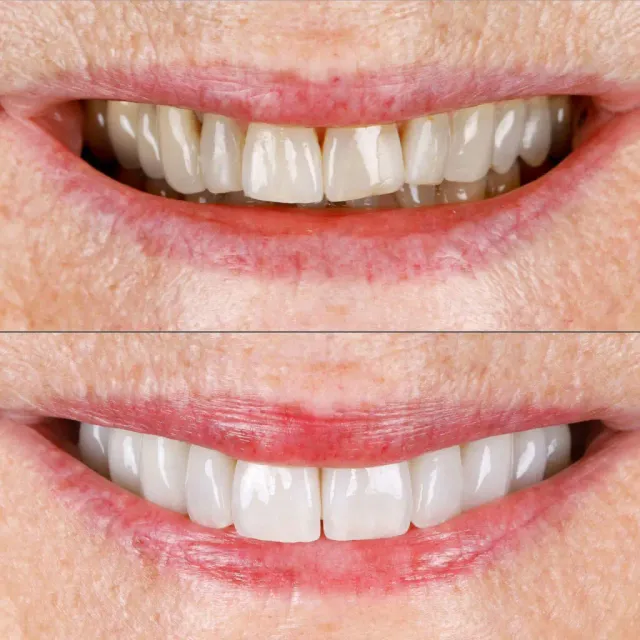
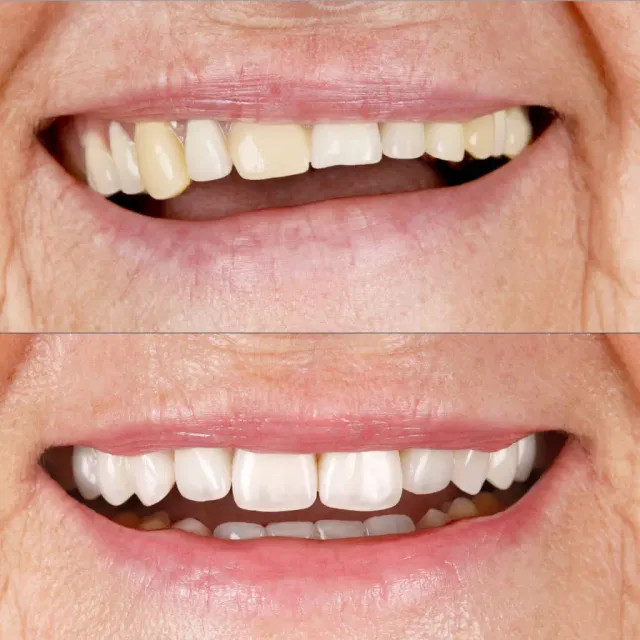
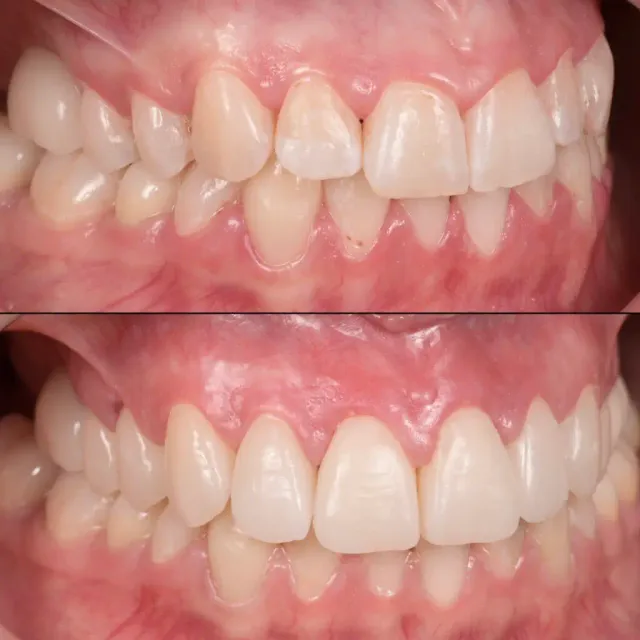
Veneers are individually crafted ceramic shells bonded to the front surface of the teeth. They correct what whitening or braces alone can't: discolouration that won't lighten, chipped edges, small gaps, uneven or slightly rotated teeth, worn enamel. The result doesn't look «done», but like your own teeth on a very good day.
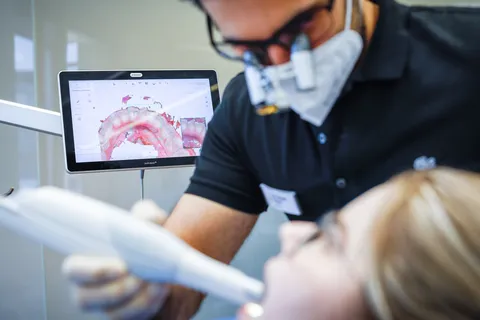
We plan veneers digitally: using photos, a scan and facial analysis, we design your smile on screen, then as a trial version in the mouth – you see and feel the result before a single tooth is touched.
In detail
Classic ceramic veneers or non-prep?
Ceramic veneers
The tooth is reduced by 0.3–0.7 mm, usually only within the enamel. Greatest design freedom, even with dark discolouration and misalignment.
- Very natural translucency
- Covers strong discolouration
- Shape change possible
Non-prep veneers
Around 0.3 mm thin shells without preparation – ideal for small, short or gapped teeth, when tooth substance should be 100% preserved.
- No drilling, no anaesthesia
- Fundamentally reversible
- Limited with strong discolouration
Process
How we proceed
Planned transparently, without surprises – you decide at every step.
Consultation & design
Photos, scan, digital design, mock-up in the mouth.
Preparation
Minimal preparation if needed, scan, temporaries; laboratory crafts them individually.
Placement
Try-in, colour matching, adhesive bonding, polishing.
Aftercare
Check-up after two weeks, preventive care, night guard if needed.
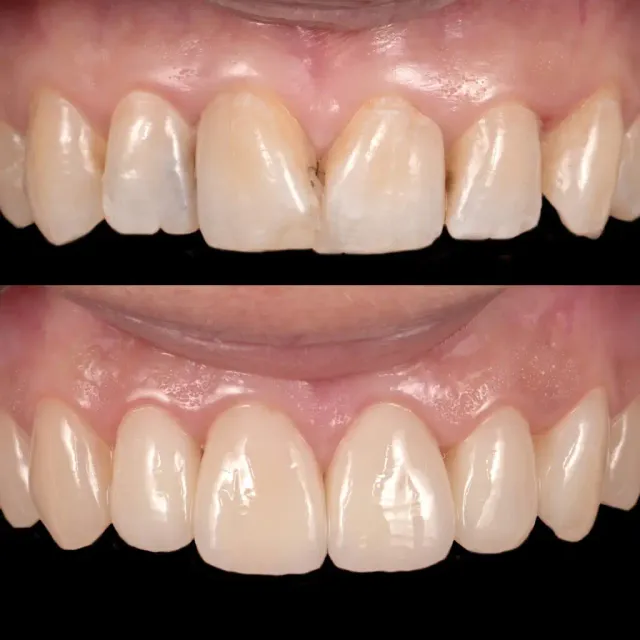
Our veneer cases

Your practitioner
Dr. med. dent. Jousef Siouri, M.Sc., M.Sc.
Master in implantology and oral surgery as well as in restorative and aesthetic dentistry, doctorate at RWTH Aachen. His principle: no standard solutions – every treatment is tuned functionally, biologically and aesthetically to the person, and you understand the diagnosis and options before a decision is made.
More about Dr. Siouri and the team →Frequently asked questions
What patients ask us
How long do veneers last?
With good care, ceramic veneers last 10 to 15 years, often considerably longer. Three things are decisive: precise adhesive bonding, regular preventive care and protection against grinding – for which we make a night guard if needed. Ceramic does not discolour and barely wears down, so the veneers usually stay beautiful for as long as the teeth beneath them are healthy.
Do the teeth have to be ground down for veneers?
For classic ceramic veneers the tooth is reduced by 0.3–0.7 mm, as a rule only within the enamel – comparable to the thickness of a fingernail. Non-prep veneers need no grinding at all: the roughly 0.3 mm thin shells are bonded directly onto the untouched tooth. Which variant fits often differs from tooth to tooth and becomes clear on the mock-up, before we change anything on the tooth.
What do veneers cost?
After the consultation you receive a binding cost estimate per tooth – with no hidden items.
Do veneers look artificial?
Veneers only look artificial when they are designed too white, too uniform or too large. We design shape and colour to suit your face, your lip line and your age – with natural translucency and the fine irregularities real teeth have. You see the result beforehand as a mock-up in your mouth and decide with us before the laboratory produces anything.
Veneers, whitening, aligners or a crown – what fits when?
If it is only about tooth colour, whitening is usually enough. If teeth are crooked or crowded, aligner therapy corrects the position permanently. If a tooth has lost a lot of substance, a ceramic crown is the more stable solution. Veneers are ideal when shape, colour and small positional flaws are to be improved at the same time – for gaps, chipped edges or discolouration that cannot be lightened. We often combine: aligners first, then veneers.
Who are veneers not suitable for?
Veneers are not the right choice with untreated caries or periodontitis, with very little remaining enamel, or on teeth with large fillings – here a crown is more stable. We clarify all of this honestly with you in the consultation.
Does the treatment hurt?
Non-prep veneers are placed without drilling and without anaesthesia. With classic ceramic veneers the minimal preparation within the enamel is done under local anaesthesia, so you feel nothing. The temporaries worn until placement are unobtrusive.
Do veneers discolour – and can they be whitened?
Ceramic veneers do not discolour, not even from coffee, tea or red wine. What can change over time is the colour of your own teeth next to them and the fine bonding line at the edge. Ceramic cannot be whitened. That is why, on request, we lighten the teeth before the veneer treatment and then match the veneer colour to the result.
What happens if a veneer breaks?
A broken veneer is rare but solvable: small chips can often be smoothed or built up directly in the mouth. If a veneer comes off entirely, it can usually be re-bonded – simply bring it with you. If it has to be replaced, the laboratory makes a new one from your stored data. A night guard reduces the risk considerably if you grind.
Appointment in Freienstein
Let us look together at what fits you.
In the consultation we analyse your situation and give you an honest assessment – without pressure.
Related treatments
You might also be interested in
Veneers – natural beauty for your front teeth at Zahnarztpraxis Freienstein: we look after patients from Bülach, Embrach, Rorbas, Kloten, Winterthur and the entire Zurich Unterland – biological, metal-free, with time for every person. Parking directly at the practice, appointments bookable online.