Biological dentistry · Freienstein
Neural therapy in dentistry
With neural therapy we test and treat interference fields in the jaw area – a complementary method within our biological dentistry.
Diagnostics
interference-field test
Therapy
local injection
Complementary
to focal treatment
Brief
a few minutes
What it is about
Neural therapy in dentistry – briefly explained
In neural therapy, a small amount of local anaesthetic (procaine) is injected into a suspected interference field – for example a root-treated tooth or an old extraction site. If complaints elsewhere in the body noticeably change, this points to an interference field.
We use neural therapy as a complement: for diagnostics before focal treatment, for treating jaw and facial pain, and to support healing after procedures. It does not replace treatment, but it helps set priorities.
In detail
Use in our practice
Interference-field diagnostics
Test injection into suspicious sites; the response helps decide what needs treatment.
- Fast
- Well tolerated
- Clear indications
Pain therapy
For TMJ complaints and tension, neural therapy can interrupt pain cycles.
- Complements splint therapy
- Repeatable
- No side effects when tolerated
Process
How we proceed
Planned transparently, without surprises – you decide at every step.
Conversation
Recording complaints and suspected sites.
Test injection
Small amount of local anaesthetic at the suspected site.
Observation
Discussing the body's response.
Consequence
Adjust the treatment plan or repeat the therapy.

Your practitioner
Dr. med. dent. Jousef Siouri, M.Sc., M.Sc.
Master in implantology and oral surgery as well as in restorative and aesthetic dentistry, doctorate at RWTH Aachen. His principle: no standard solutions – every treatment is tuned functionally, biologically and aesthetically to the person, and you understand the diagnosis and options before a decision is made.
More about Dr. Siouri and the team →Frequently asked questions
What patients ask us
What is neural therapy at the dentist and how does it work?
In neural therapy, small amounts of a local anaesthetic, usually procaine, are injected into specific areas of the dental, jaw or scar tissue. The aim is to briefly interrupt local irritation and observe whether existing complaints change as a result. In biological dentistry, neural therapy can be used both therapeutically and as a complement to diagnostics.
Can root-treated teeth be an interference field?
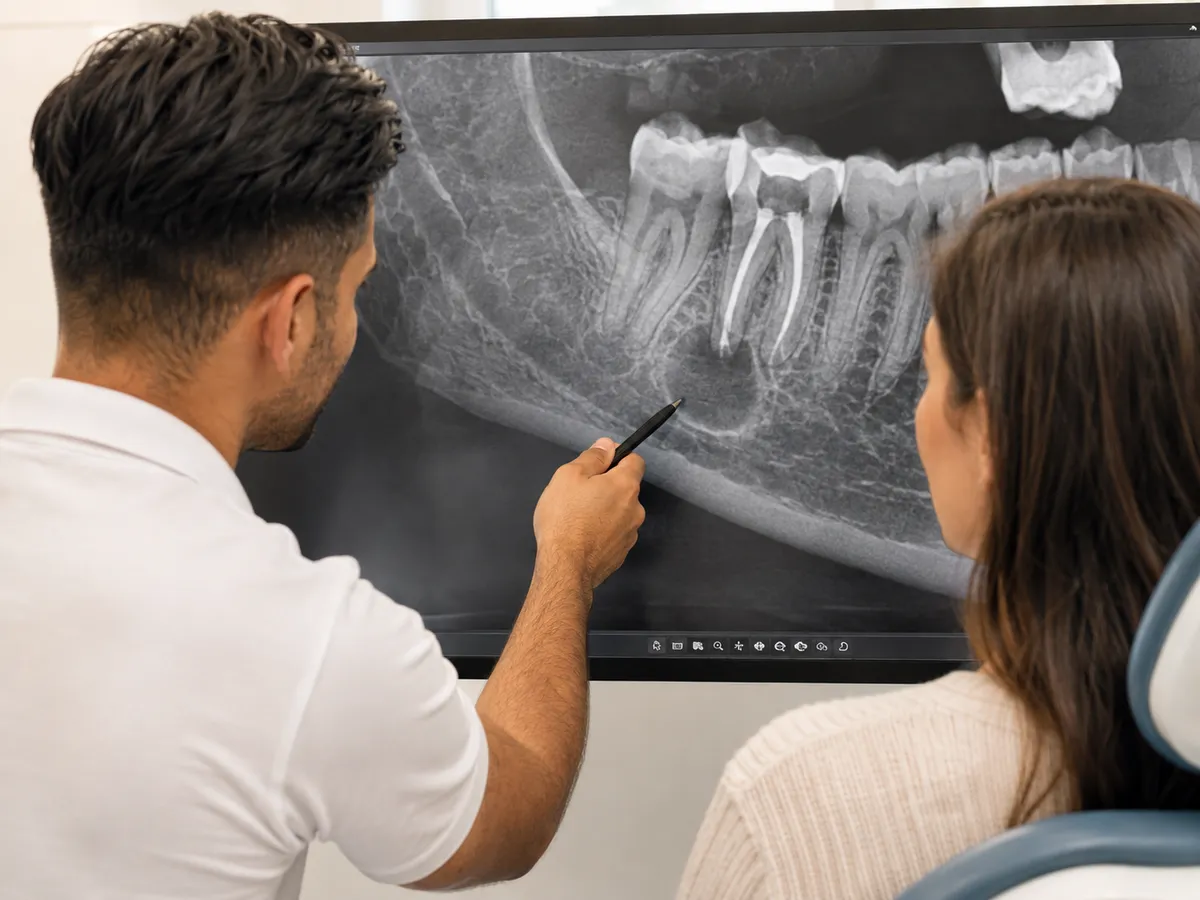
As part of a holistic or biological dental examination, root-treated teeth can be considered as possible interference fields. We do not assess the tooth in isolation, but take into account complaints, clinical findings and existing X-rays or, where appropriate, a 3D scan. Targeted neural therapy with procaine can provide additional indications of whether a particular area could be related to the existing complaints. A reaction to the test injection alone, however, does not prove that a tooth must be removed.
How does an interference-field test with procaine at the dentist work?
In an interference-field test, a small amount of procaine is injected directly into the region of a suspected interference field. We then observe whether existing complaints change or ease in the short term. A clear change can be a diagnostic indication of a possible connection. The result is always assessed together with the clinical findings and imaging diagnostics.
For which complaints can neural therapy be used in the dental and jaw area?
Neural therapy can be used as a complementary treatment for various complaints in the dental, jaw and facial area. These include chronic jaw pain, facial pain, muscular tension, complaints after dental procedures, and pain around scars or previous surgical sites. Neural therapy can also be part of the diagnostics when clarifying possible interference fields in the dental and jaw area.
Can neural therapy help with TMJ disorders and jaw-joint complaints?
For TMJ disorders, jaw-joint complaints and muscular tension, neural therapy can be used as a complementary treatment. For example, painful muscle areas or trigger points can be treated specifically with procaine. Depending on the cause of the complaints, we combine neural therapy with further measures such as splint therapy, functional diagnostics or physiotherapy.
Appointment in Freienstein
Let us look together at what fits you.
In the consultation we analyse your situation and give you an honest assessment – without pressure.
Related treatments
You might also be interested in
Neural therapy in dentistry at Zahnarztpraxis Freienstein: we look after patients from Bülach, Embrach, Rorbas, Kloten, Winterthur and the entire Zurich Unterland – biological, metal-free, with time for every person. Parking directly at the practice, appointments bookable online.