
Aesthetics · Freienstein
Non-Prep Veneers – Beautiful Teeth Without Grinding
Ultra-thin ceramic around 0.3 mm, bonded directly to the untouched tooth: non-prep veneers enhance your smile without drilling, without anaesthesia and are fundamentally reversible.
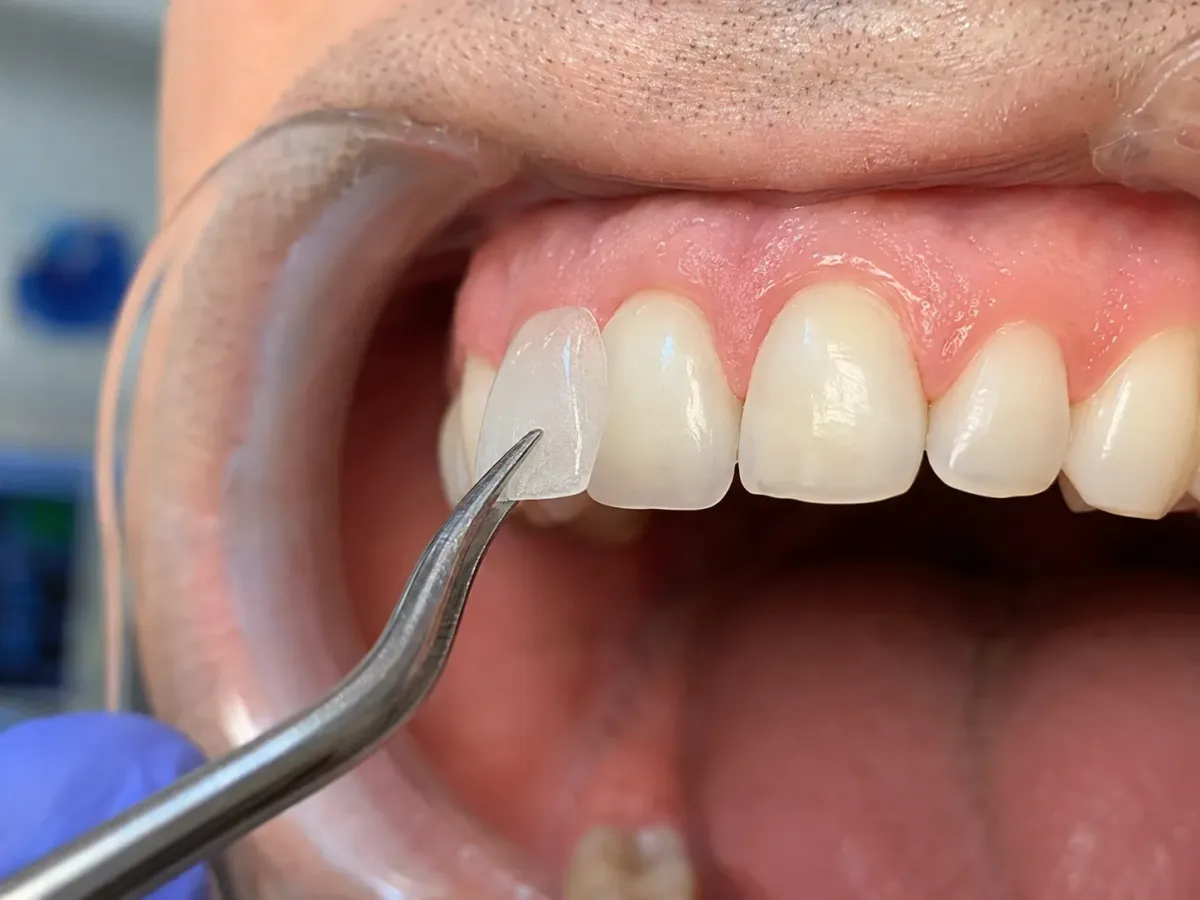
~0.3 mm
thin as a contact lens
0 drilling
no preparation
reversible
tooth stays untouched
2 appointments
planning & placement
What it is about
Non-Prep Veneers – briefly explained
Not every tooth needs preparation. When teeth are rather small, short, slightly gapped or worn, non-prep veneers can be bonded on without any loss of tooth substance. They lengthen, widen and harmonise – and even protect the enamel.
There are limits with severe discolouration and pronounced misalignment: because the ceramic is so thin, it doesn't fully cover dark teeth. Whether non-prep suits you is something we assess on a model and in the mock-up – often deciding tooth by tooth.
In detail
Who are non-prep veneers suitable for?
Ideal
Lengthen, widen, close gaps, rebuild worn edges – without touching the tooth.
- No loss of tooth substance
- No anaesthesia
- Reversible
Less suitable
Here, classic veneers or prior whitening or aligners are the better choice – we advise honestly.
- Whitening beforehand
- Aligners beforehand
- Classic veneers
Process
How we proceed
Planned transparently, without surprises – you decide at every step.
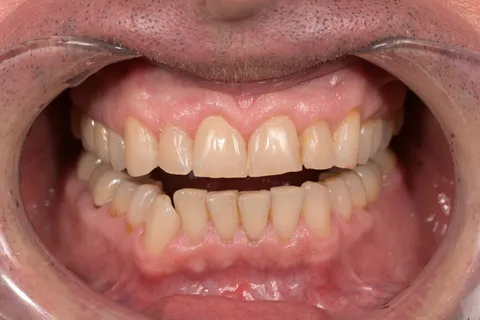
Consultation
Photos, scan, wishes, checking feasibility.
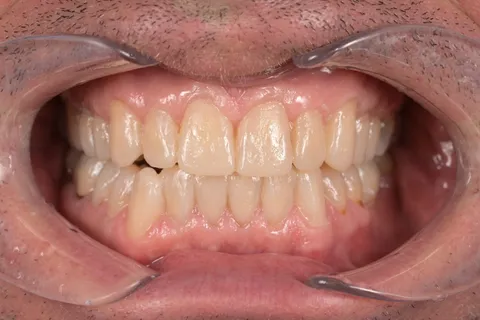
Design & mock-up
Digital design, trial version in the mouth.
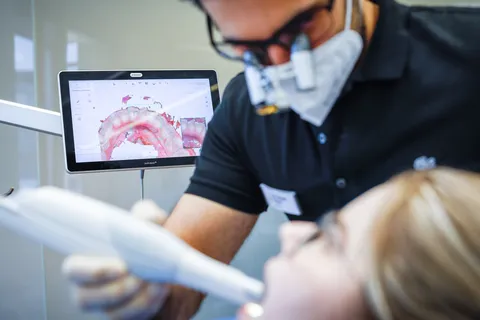
Placement
Bond the ceramic adhesively, polish – without drilling.
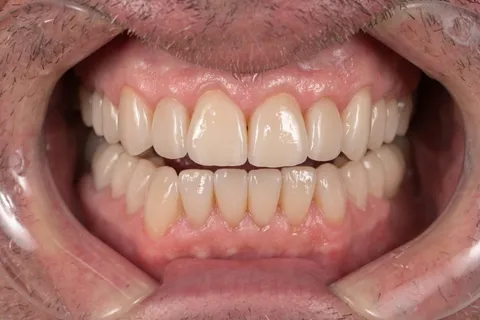
Check-up
After two weeks; preventive care as usual.
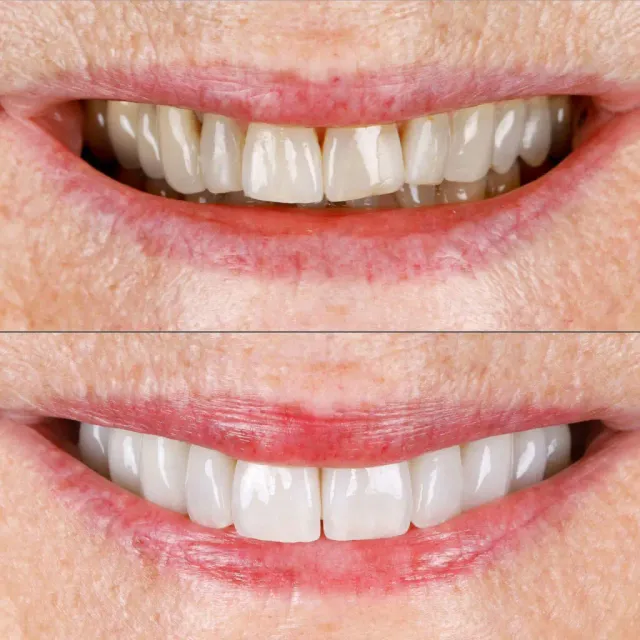
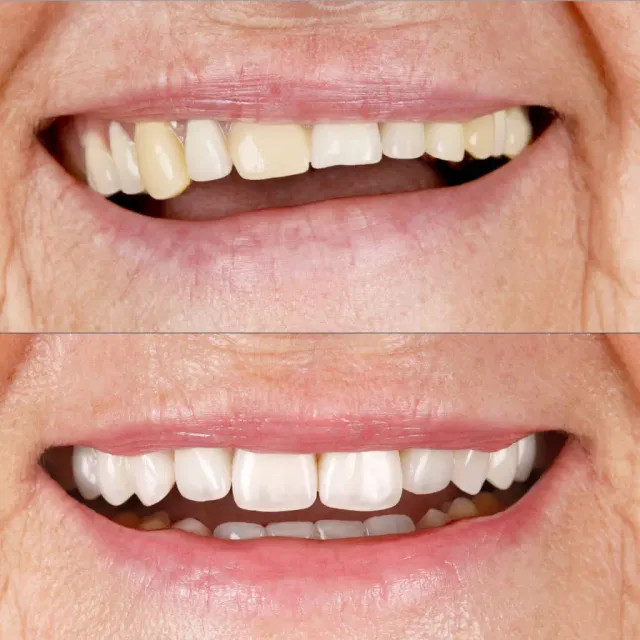
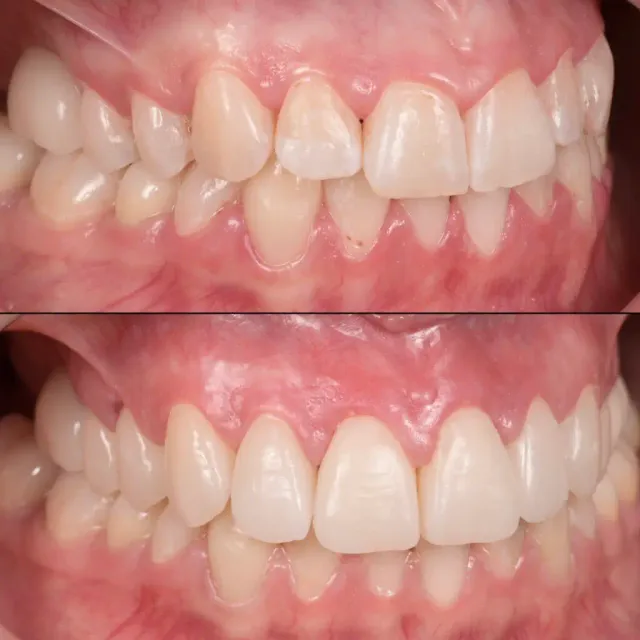
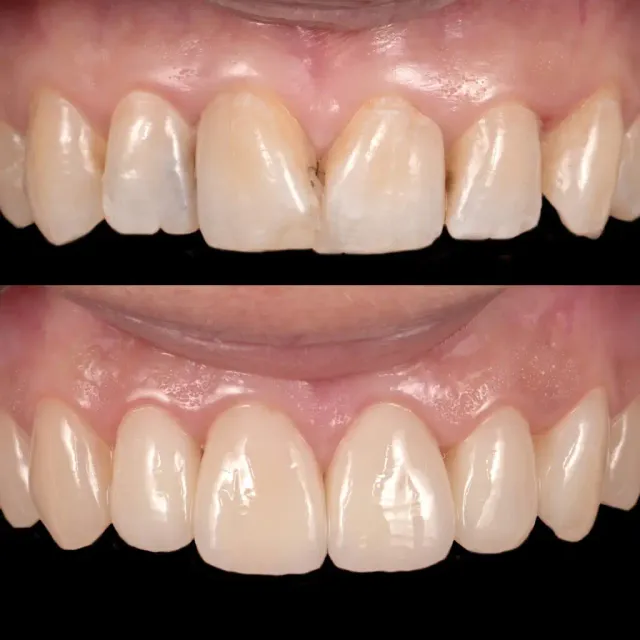
Our veneer cases

Your practitioner
Dr. med. dent. Jousef Siouri, M.Sc., M.Sc.
Master in implantology and oral surgery as well as in restorative and aesthetic dentistry, doctorate at RWTH Aachen. His principle: no standard solutions – every treatment is tuned functionally, biologically and aesthetically to the person, and you understand the diagnosis and options before a decision is made.
More about Dr. Siouri and the team →Frequently asked questions
What patients ask us
Do non-prep veneers last as long as classic veneers?
Yes – with the right indication, non-prep veneers last just as long as classic ceramic veneers, that is 10 to 15 years and often longer. The reason: adhesive bonding to enamel is considerably more stable than to dentine, and the non-prep procedure leaves the enamel fully intact. The conditions are a clean margin design, regular preventive care and a night guard if you grind.
Do non-prep veneers look thick or bulky?
Non-prep veneers only look applied when they are placed on teeth that are not suited to them – on teeth that are already large or protruding, for example. On small, short or gapped teeth the roughly 0.3 mm thin ceramic adds exactly what is missing. What matters is a clean transition to the gum so that no step forms. We check both beforehand on the mock-up in your mouth.
Can I have non-prep veneers removed again?
Yes, non-prep veneers are reversible in principle, because the tooth underneath was not ground down. The ceramic can be carefully removed and the enamel then polished – the tooth looks as it did before. That is the big difference to classic veneers, where the prepared surface has to stay permanently restored. In practice very few patients want this; usually they are simply renewed after many years.
What is the difference between non-prep veneers and classic veneers?
The difference lies in how the tooth is prepared: for classic ceramic veneers the tooth is reduced by 0.3–0.7 mm, while non-prep veneers are bonded onto the intact tooth without any grinding. In return they are thinner and mask dark discolouration less well. Classic veneers offer more design freedom, non-prep preserves the tooth substance completely. We often decide tooth by tooth which variant fits.
Are non-prep veneers suitable for discoloured or crooked teeth?
Only to a limited extent. Because non-prep veneers are so thin, dark teeth show through the ceramic. We even out slight discolouration beforehand with whitening; with strong discolouration classic veneers are the better choice. Pronounced misalignment we correct first with aligners – after that, non-prep veneers can harmonise shape and length. Small rotations or gaps, on the other hand, the ceramic evens out directly.
Are non-prep veneers the same as Lumineers?
Lumineers is a brand name for the non-prep veneers of one particular US manufacturer; the procedure behind it is the same: wafer-thin ceramic without preparation. We are not tied to a brand but have the shells made individually by our dental laboratory, matched to your tooth colour and facial shape. What is decisive for the result is not the label but the right indication.
Is anaesthesia needed – and how long does it take?
No, no anaesthesia is needed for non-prep veneers, because the tooth is not ground down – placement is painless. The treatment takes two appointments: at the first we take photos, a scan and the digital design with a mock-up; at the second the veneers are tried in, adhesively bonded and polished. In between there are usually two to three weeks of laboratory time. Temporaries are not needed.
Appointment in Freienstein
Let us look together at what fits you.
In the consultation we analyse your situation and give you an honest assessment – without pressure.
Related treatments
You might also be interested in
Non-prep veneers – beautiful teeth without grinding at Zahnarztpraxis Freienstein: we look after patients from Bülach, Embrach, Rorbas, Kloten, Winterthur and the entire Zurich Unterland – biological, metal-free, with time for every person. Parking directly at the practice, appointments bookable online.