Surgery & implants · Freienstein
FDOK / NICO – silent inflammation in the jawbone
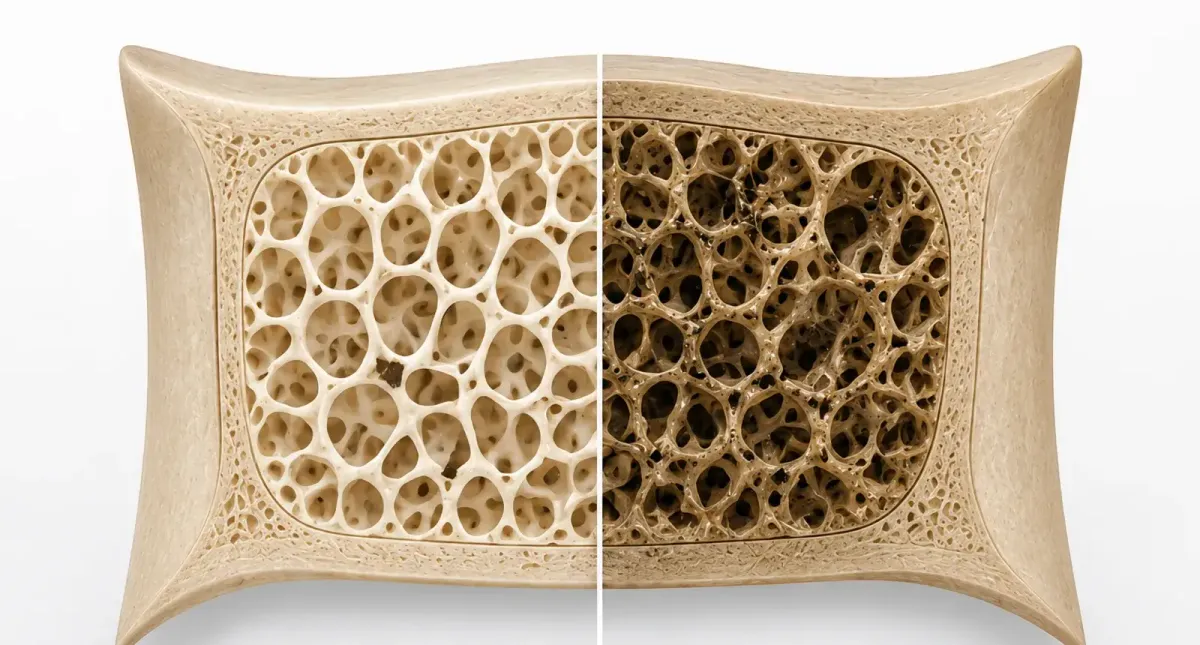
Fatty-degenerative osteolysis (FDOK/NICO) are chronic, usually painless zones of inflammation in the jawbone. We make them visible with 3D CBCT and treat them gently.
CBCT
instead of 2D X-ray
Painless
often without local symptoms
Ozone + PRF
for safe healing
Interdisciplinary
with your doctor
What it is about
FDOK / NICO – briefly explained
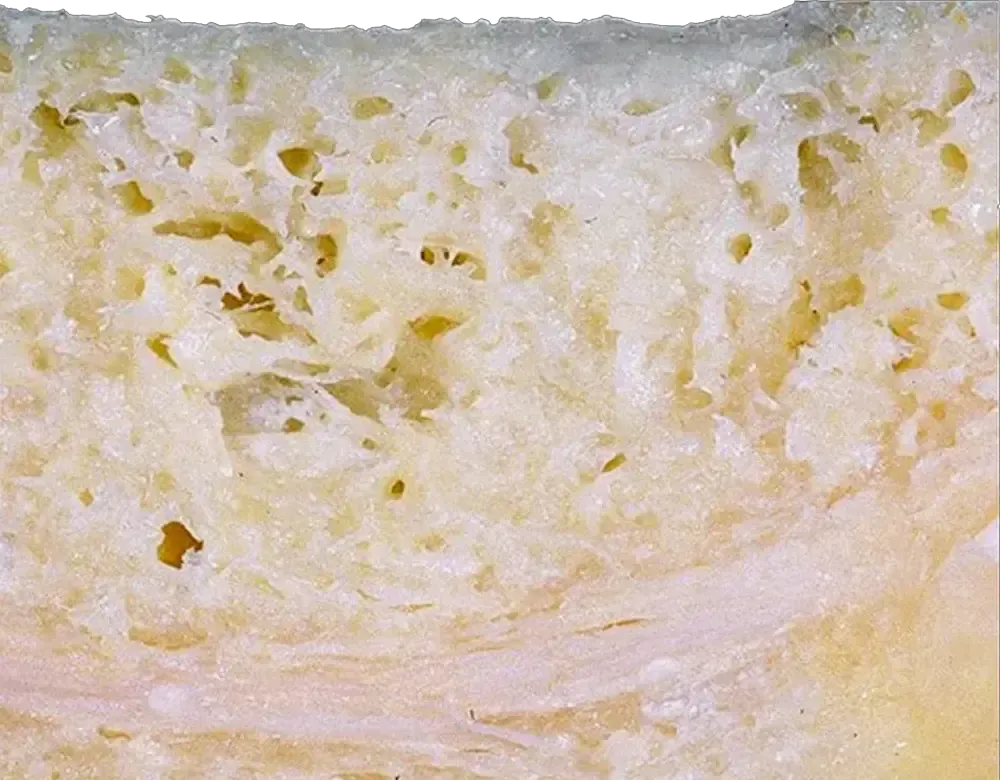
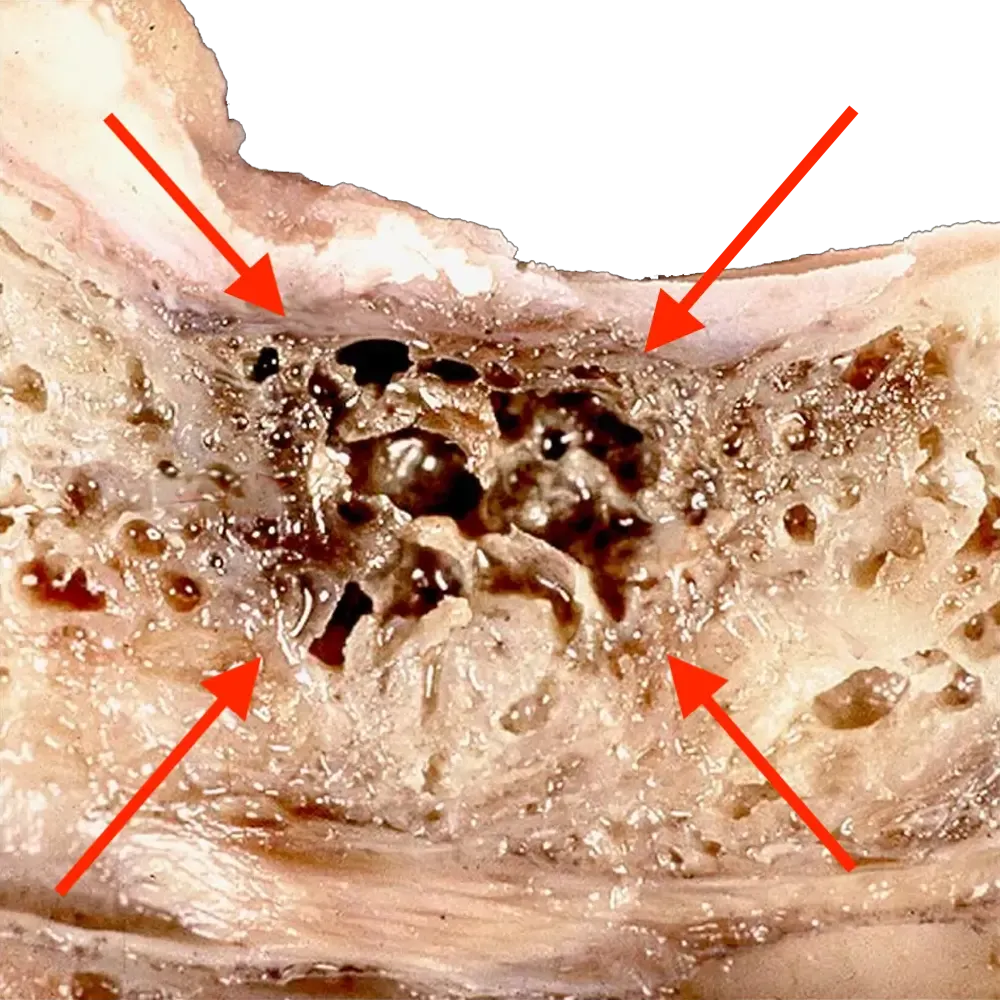
FDOK/NICO often develop at old extraction sites – for example after wisdom tooth removal – when the bone has not healed completely. Hollow, fatty-degenerated zones with chronic inflammatory activity form, releasing messenger substances into the body.
Because they usually cause no local pain, they often go unnoticed. We identify them with 3D CBCT and a clinical examination; treatment is minimally invasive with thorough debridement, ozone disinfection and PRF filling. We work closely with holistically oriented doctors.
In detail
Diagnosis and treatment
Diagnostics
Suspicious zones on the CBCT scan, matched against the symptom picture, laboratory or ultrasound diagnostics if needed.
- Systematic search
- Clear discussion of findings
- No over-treatment
Treatment
Small access, careful debridement, ozone, PRF – good healing, minimal discomfort.
- PRF autologous blood
- Ozone
- Short downtime
Process
How we proceed
Planned transparently, without surprises – you decide at every step.
History
Symptoms, previous extractions, medical findings.
CBCT scan
3D imaging, evaluation, discussion.
Treatment
Debridement, ozone, PRF – if needed, several sites in stages.
Aftercare
Healing check, feedback to your doctor.

Your practitioner
Dr. med. dent. Jousef Siouri, M.Sc., M.Sc.
Master in implantology and oral surgery as well as in restorative and aesthetic dentistry, doctorate at RWTH Aachen. His principle: no standard solutions – every treatment is tuned functionally, biologically and aesthetically to the person, and you understand the diagnosis and options before a decision is made.
More about Dr. Siouri and the team →Frequently asked questions
What patients ask us
How many sites can be treated?
Several – usually in stages, so the burden stays low.
How quickly does it heal?
With PRF, within one to two weeks; a check-up follows after a few days.
What symptoms does an FDOK/NICO cause?
Usually none locally – the jaw itself rarely hurts. Possible links exist to unclear facial pain, trigeminal complaints, chronic fatigue or other systemic issues. That's why an FDOK is often only discovered through targeted search on CBCT.
Is a normal X-ray enough for diagnosis?
Usually not. FDOK zones are often invisible on 2D X-rays. They can only be reliably identified on 3D CBCT, combined with the clinical examination and your symptoms.
Does the procedure hurt – and how long is the recovery?
The procedure is performed under local anaesthesia through a small access. Thanks to PRF, swelling is minimal; most patients are back to daily life within a few days.
Can an FDOK return after treatment?
With thorough debridement, ozone disinfection and PRF filling, this is rare. We monitor healing as part of aftercare.
Is FDOK related to wisdom tooth removal?
Yes, often. Old extraction sites – especially in the wisdom tooth area – are the typical locations when the bone there has not healed completely.
Appointment in Freienstein
Let us look together at what fits you.
In the consultation we analyse your situation and give you an honest assessment – without pressure.
Related treatments
You might also be interested in
FDOK / NICO – silent inflammation in the jawbone at Zahnarztpraxis Freienstein: we look after patients from Bülach, Embrach, Rorbas, Kloten, Winterthur and the entire Zurich Unterland – biological, metal-free, with time for every person. Parking directly at the practice, appointments bookable online.